
Introduction
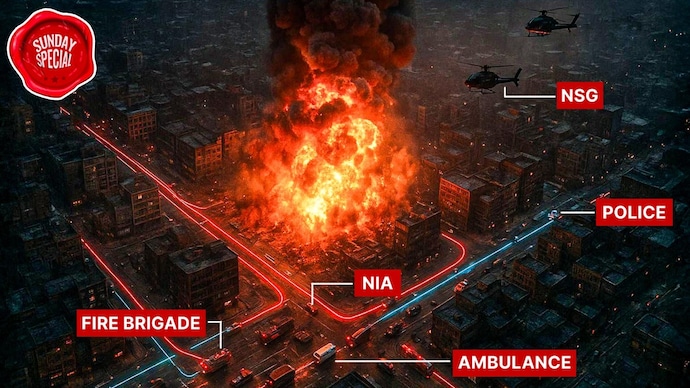
On November 10, Delhi’s Red Fort area witnessed a devastating car blast, leaving 13 people dead and several injured. For most people, the first phone call reporting the explosion marks the beginning of a chaotic and terrifying sequence. But behind the scenes, a highly coordinated response involving multiple central and state agencies kicks into action immediately. This article explains, step by step, how India’s counter-terror machinery operates in the aftermath of such attacks, drawing insights from veterans and security experts.
The First Call and Initial Response
The moment an explosion occurs, eyewitnesses or locals usually dial emergency numbers to report the incident. Police control rooms receive these calls and immediately alert on-ground units, sending officers to secure the area and provide emergency aid.
In Delhi, the first responders are typically the Delhi Police’s local units, who cordon off the blast site, evacuate civilians, and establish a secure perimeter. Traffic is diverted, and medical teams are dispatched to assist the injured. Simultaneously, higher command structures, such as the Commissioner of Police, are informed so that a broader response can be coordinated.
navymovie.com | omazezone.co | filmfamefusion.com
celebritiesdailysoap.com | glamoursinsider.com
Alerting Central Agencies
For major blasts or attacks near strategic or iconic locations like the Red Fort, central agencies such as the National Security Guard (NSG) and the National Investigation Agency (NIA) are notified immediately.
The NSG is India’s elite counter-terror unit trained to handle bomb threats, hostage situations, and high-risk operations. In the Red Fort case, veterans explain that the NSG would deploy a bomb disposal squad to assess unexploded devices, identify potential secondary threats, and prevent further casualties.
The NIA takes the lead in investigating terror connections, identifying the modules involved, and collecting evidence for prosecution. Their involvement ensures that intelligence is shared nationally and internationally if cross-border links are suspected.
Coordination Between Agencies
One of the most critical aspects of handling such incidents is coordination. The police, NSG, NIA, and forensic teams operate on clearly defined protocols, but rapid communication is essential to avoid duplication and ensure safety.
Senior police officers set up control rooms near the site, often using mobile command centers, where all agencies communicate real-time updates. Intelligence inputs from agencies such as the Research and Analysis Wing (RAW) or Intelligence Bureau (IB) may also be fed in to identify possible terrorist affiliations.
Forensic Science and Evidence Collection
Forensic experts arrive swiftly to document the scene, collect residues, and analyze materials like explosives, shrapnel, and other devices. In the Red Fort blast, the recovery of items like 9mm cartridges highlights the crucial role forensic teams play in identifying the type of weapons or ammunition used.
DNA samples, fingerprints, and CCTV footage are meticulously collected and analyzed. Even tiny details—like fragments of the vehicle or traces of chemicals—can provide leads on who supplied the explosives, how they were assembled, and the likely perpetrators.
Managing Casualties and Public Safety
Parallel to the investigation, emergency medical services manage casualties. Victims are transported to nearby hospitals, triaged based on the severity of injuries, and stabilized. Hospitals coordinate with the police to ensure that families are informed and that forensic procedures, such as post-mortem examinations, can be carried out.
Public safety advisories are issued, urging citizens to avoid the area and remain vigilant. In the case of blasts at historical or crowded sites, additional security measures, including drones, sniffer dogs, and surveillance cameras, are deployed to prevent further incidents.
Intelligence and Lead Generation
Within hours of the blast, intelligence agencies work to generate leads. They analyze patterns, probe previous terror activities, and check whether similar explosives have been used elsewhere. Communication intercepts, social media monitoring, and inputs from local informants can provide early clues.
If links to known terror modules are suspected, raids may be conducted in other locations to prevent further attacks. Coordination ensures that actionable intelligence reaches all agencies simultaneously, reducing response time.
Public Communication and Media Management
Authorities must also manage information released to the public. Accurate reporting is essential to prevent panic, misinformation, and the spread of rumors. In Delhi, spokespersons for the police and central agencies provide periodic updates, highlighting casualties, ongoing investigations, and safety measures.
Veterans emphasize that controlled communication is part of a larger psychological strategy. It reassures the public while sending a signal to perpetrators that the state is alert and capable of swift action.
Post-Incident Analysis and Prevention
Even after the immediate threat is neutralized, agencies conduct a thorough post-incident review. They assess the security lapses that allowed the attack, identify vulnerabilities, and recommend preventive measures.
In addition, the sequence of events—from first call to final arrests—is studied to improve protocols, response time, and coordination for future incidents. For example, the Red Fort blast highlighted the importance of monitoring explosive materials and potential misuse of military-grade ammunition.
The Human Element
While technology, intelligence, and coordination play a major role, human effort remains central. Officers risk their lives to clear debris, secure sites, and chase leads. Investigators spend hours analyzing evidence, often under intense pressure.
The bravery and dedication of these personnel are often unseen but critical in ensuring that justice is served and future attacks are prevented.
Conclusion
A terror attack, such as the Red Fort blast, triggers a highly organized response involving multiple layers of India’s security apparatus. From the first phone call reporting the explosion to the forensic analysis and post-incident investigations, every step is coordinated to save lives, collect evidence, and ensure justice.
The recovery of military-grade ammunition, like 9mm cartridges, underscores the sophistication of some terror attempts and the need for constant vigilance. Central agencies, state police, forensic teams, and intelligence units work in tandem to neutralize threats, prevent further incidents, and maintain public confidence.
For citizens, the message is clear: while incidents of terror can be shocking, India’s counter-terror framework is designed to respond quickly and effectively, ensuring that perpetrators are brought to justice and public safety is maintained.
